
Panama Casino Room: What Is the Minimum Bet?
The floor minimum at a Panama casino room is not a marketing number — it is a hard-coded threshold wired into the table's betting logic, and if you don't know where the chip floor sits, you're already leaking edge before the first hand is dealt. I've audited enough Latin American gaming floors to tell you straight: the minimum bet in Panama is a moving target, and the house engineers it that way on purpose.
The Two-Tier Floor Structure Nobody Explains
Panama's casino rooms run a split floor model. Electronic terminals and low-limit digital tables open at a genuinely aggressive minimum bet — think $0.10 to $0.50 per spin on slots and $1 to $2 on automated roulette and blackjack variants. But the moment you walk onto a live-dealer felt table inside a proper casino room, the floor jumps hard: $5 to $10 on weekday afternoons, $15 to $25 on weekends, and $50-plus on the premium pits in the capital's larger properties. That gap between terminal floor and live floor is not a service decision. It is a volatility filter.
Why the House Sets the Floor Where It Does
Here is the mechanic most players never see. The table minimum is calibrated against the house edge per hour, not per hand. A $5 blackjack table with a 0.5% edge and 60 hands per hour extracts roughly $1.50 per player-hour — thin. So operators push the floor up until the expected extraction per seat justifies the dealer wage, the shuffle machine cycle, and the pit supervisor's attention. That's why live tables in Panama rarely sit below $5 and never below $3 outside promotional windows. If you find a live table under that, it's either a loss-leader or a trap with brutal side-bet rules. 🎲
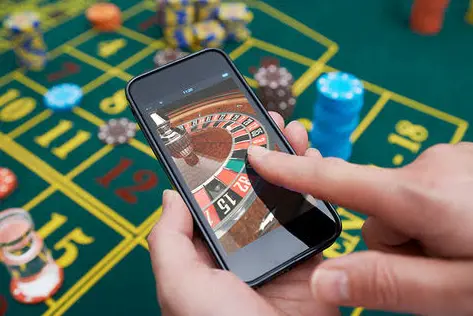
Electronic Tables: The Real Low-Floor Playground
Automated and hybrid terminals are where the genuine low minimums live. Panama casino rooms typically set these floors at $0.10 for penny slots, $0.25 to $1 for video poker variants, and $1 to $2 for stadium-style roulette and baccarat terminals. These numbers hold because the terminal has no per-seat labor cost — the floor can drop to a tenth of a live table and still clear margin on volume. If your bankroll is under $100, the terminal floor is your only mathematically survivable entry point in a Panama room.
Promotional Floors and the Fine Print Trap
Weekday morning promos advertise $1 live blackjack and $0.50 roulette. Read the table card before you sit. Those floors almost always carry a compulsory side bet or a reduced 6:5 blackjack payout that quietly claws back the difference. A $1 table with 6:5 natural payouts runs roughly 1.4% house edge against your bankroll — worse than a $10 table paying 3:2. The floor number is bait; the rule card is the real price. 🃏

How the Floor Interacts With Your Bet Spread
Your minimum bet defines your entire ramp. If the floor is $10 and your bankroll is $500, you're capped at 50 units — a spread that gets crushed by normal variance in under two hours. Serious players match bankroll to floor using a 200-unit rule: a $10 floor demands a $2,000 stake just to survive a standard downswing. The Panama rooms know this, which is exactly why the live floor sits where it does — it prices out the underfunded and keeps the felt clean for players who can actually weather the swings. 💰
Verifying the Floor Before You Commit
Floors change by pit, by shift, and by day. Confirm the posted minimum on the physical table card, not the signage above the pit — the card is legally binding, the sign is decoration. Cross-check the rule set, the payout schedule, and whether the floor applies per hand or per round of side bets. Any discrepancy between the advertised floor and the card is a red flag worth walking away from, because a room that fudges the minimum will fudge the shuffle.